
The Monthly Routine #2 – June 2026
Just like that nearly half the year has gone already. June has been a busy one and there is a lot to cover this month.
Royal Cornwall Show
We had vets on site from Tuesday morning through to Saturday, covering everything from early arrivals to the final departures. A brilliant Thursday and Friday, shame about the Saturday, but the right call given the conditions. It was great to see so many of you there, and congratulations to all our clients who exhibited and had some fantastic results from cattle to eggs!
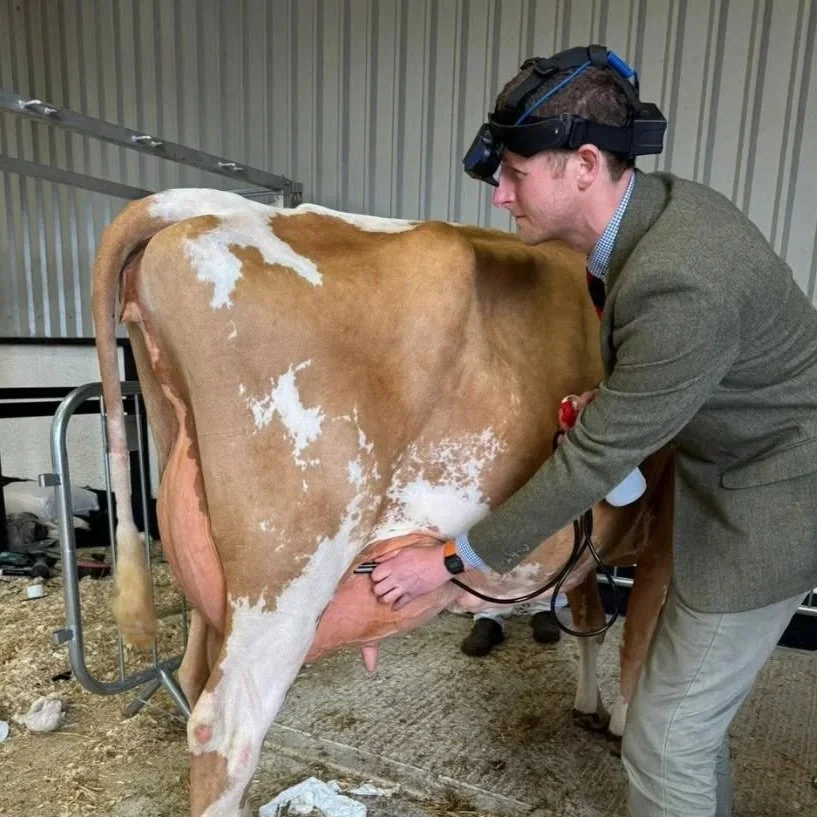
As per last year, I was responsible for ultrasound scanning the udders of dairy cows that placed in their categories. For those who haven't come across it before the attached picture is an example of it being carried out. Cows at dairy shows are typically presented with their udders full and a longer milking interval usually makes for a more impressive udder. The problem is that this can cause fluid to build up in the udder tissue, which is uncomfortable for the cow and, beyond a certain point, a welfare concern. For fans of research papers there is a nice one published in the Journal of Dairy Science that shows milking intervals over 16 hours lead to a 9x increase in the risk of detectable udder oedema compared to cows milked at normal intervals. Ultrasound lets us assess this objectively and demonstrates how serious the Royal Cornwall Agricultural Association are about monitoring animal welfare at the show. I'm pleased to say all the cattle we scanned passed without any issues.
Worms
It is getting to the time of year when worm burdens at pasture start to increase. We have been making use of our Micron kit to carry out mob faecal egg counts (FECs) in house. We take a dung sample, process it, and count the parasite eggs. It tells us what's there, how much of it, and whether a worming treatment is required or has worked.
We see a lot of clear (ivermectin) pour on used routinely on adult cattle, but generally they have sufficient acquired immunity that this isn't necessary. However, youngstock in their first grazing season are a different matter. Significant worm burdens are common in this group and will affect growth rates even without obvious scouring. The classic protocol of worming at three, eight and thirteen weeks after turnout is still talked about, but on most farms it isn't required. My recommendation is to mob FEC every three to four weeks for youngstock groups from turnout until at least September. Many farms won’t require treatments until August and some won't need to treat at all during the summer.
At least partial ivermectin resistance is being reported on a significant proportion of farms across West Cornwall and every unnecessary treatment accelerates this process. A faecal egg count reduction test (FEC before treatment and again 10–14 days afterwards) tells us whether the product you're using is actually working.
The above is general advice and there are always exceptions, such as herds that suffer from lungworm and require specific plans to manage this. If in doubt, the safest bet is to contact us directly to discuss a worm control programme, especially for sheep where the resistance picture is even more serious. I’m also planning to discuss housing doses of wormer and flukicide as we get towards the Autumn.
Flies
A quick note for next year: we’ve now had some really interesting experience advising and supplying clients with a biological fly control called Biowasp. These are parasitic mini wasps that target fly pupae in bedding and dung. It's a clever system and early feedback has been positive so worth looking into ahead of next spring if fly pressure is a problem for you.
As always, registered clients keep an eye on your inboxes for The Monthly Routine in full. Any questions, call the practice or email zack@towanvets.co.uk.
All the best, Zack