The Monthly Routine #3 – July 2026
Just like most of the livestock we’ve seen in the last month, July has been spent trying to find some shade to stand under. More than one case of heat stroke, which is pretty unusual and reflects just how prolonged this hot spell has been.
Training Courses
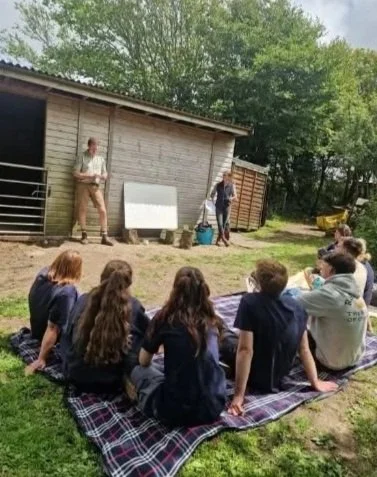
A real highlight was running a sheep husbandry training session for staff and volunteers at The Cinnamon Trust. We covered a wide range of topics including handling, body condition scoring, foot care and early identification of common conditions. Great turnout and really insightful questions from people who clearly care a lot about the animals. It is always an interesting challenge putting together a bespoke course like this one.
Coccidiosis
On the calf health side, we had a group of weaned Spring born calves that weren’t gaining condition as expected and a minority were scouring. Dung sampling came back with a high coccidial oocyst count, and we treated the entire group with an oral drench.
This is worth flagging because coccidiosis doesn’t always make itself obvious with the classic clinical presentation of bloody mucousy diarrhoea. A study from Europe has shown infected calves can lose on average 129g a day in growth compared with uninfected calves. This is nearly 1kg a week even if they’re not scouring. Subclinical disease like this can cost UK herds up to £60 a calf, all without anyone necessarily noticing anything is wrong. For calves that aren't thriving, housed or at grass, it's often worth getting a dung sample checked before blanket treatment as a proper oocyst count is very informative. Interestingly, there are several cocci species and not all cause disease, so we’ll often get initial samples speciated to make sure a hight count isn’t a red herring.
TB Strategy
Bigger picture news this month as the independent group that reviews national bovine TB strategy has published its recommendations for the next phase of the official plan to eradicate the disease by 2038. A few highlights worth knowing about if you keep cattle:
A cattle TB vaccine now looks like it could be available by 2030, starting in high risk areas (like ours). The main challenge to this has been developing a new skin test that can differentiate infected from vaccinated animals (DIVA).
There's a proposal to start sharing herd level TB risk scores with farmers. APHA already calculates these each month internally but they aren’t made public. The idea would be that farmers could look up the risk profile of an animal they're buying.
Cattle that have an inconclusive test result then go clear on a retest are currently restricted to their holding for life and can only leave to go direct to slaughter. However, it is possible to remove this restriction by having a private (and pricey!) gamma blood test carried out. The recommendation is to remove the gamma clearance option, so the restriction becomes truly permanent. This is not unexpected as studies from the UK have shown that IRs are 7 to 12 times more likely to become full reactors later on than a normal TB negative animal.
Badger culling is a highly controversial topic, but still on track to cease by the end of this Parliament and the aim is for vaccination to replace this. Trial data has shown that vaccinated wild badgers were 76% less likely to test positive for TB than unvaccinated neighbours.
Next month’s topics likely to depend on the weather. Parasites at pasture will be unpredictable with this prolonged dry spell so likely to give an update on this. Let me know if there's anything you'd like covered. For registered clients The Monthly Routine will go out by email shortly with a bit more detail. Any queries, give the practice a call or email me directly zack@towanvets.co.uk
All the best,
Zack
See less